
Xiaohongshu 2026 Crowd Universe: From Knowing the Audience to Understanding Why They Choose
- See Qian

- 2 hours ago
- 7 min read
China’s consumer market is becoming more precise, emotional and decision-led. For brands, the key question is no longer only “Who is our target audience?” but “Why does this audience choose one product, destination or experience over another?”
A consumer may look simple on paper, but their real purchase decision may be shaped by convenience, emotional reward, self-expression, social belonging, family needs, health concerns or a very specific usage occasion. On Xiaohongshu, these motivations often appear through searches, saved posts, comments, reviews and creator-led recommendations, making the platform a valuable space for understanding both demand and intent.
From Audience Targeting to Decision Understanding
The Xiaohongshu Crowd Universe shows how consumer understanding has evolved from “who they are” to “why they choose”. Its audience framework can be understood through four layers:
Basic audience profiles: age, gender, location, consumption power and other demographic signals.
Interest audiences: what users actively like, such as beauty, travel, outdoor activities, food, pets, home aesthetics and digital products.
Lifestyle audiences: how users live, including life stage, emotional needs, values and daily routines.
Industry decision-factor audiences: why users choose one option over another within a category.

This final layer is especially valuable for brands. Traditional targeting often stops at broad identity or interest. Xiaohongshu’s approach moves closer to the real decision moment: what matters when a user compares similar products, services or destinations?
According to the report, Xiaohongshu Lingxi has developed a layered audience system that includes:
150+ basic profile tags
720+ interest tags
140+ lifestyle tags
3,200+ industry decision-factor tags
20+ covered industries
For brands, this provides a more practical way to connect consumer insight with Xiaohongshu content strategy, KOL selection, media targeting and campaign activation.
The Shift from Traffic to Intent
For years, digital marketing in China focused heavily on reach and exposure. Brands bought traffic, built awareness and hoped users would move through the funnel. This report highlights a more precise opportunity: reaching consumers when their needs are already forming.
A user is not just “interested in travel”. They may be looking for a direct-flight destination, a healing weekend break, a family-friendly hotel, a diving trip or a luxury wellness escape.
A beauty consumer is not just “interested in skincare”. They may be searching for sensitive skin repair, pregnancy-safe body care, scalp volume solutions, commuting make-up or a fragrance that matches a certain mood.
This means brands need to build campaigns around decision moments, not just product features. Strong Xiaohongshu marketing should answer:
What is the user trying to solve?
What situation are they in?
What makes them hesitate?
What proof or content will help them feel confident?
Which creator or KOL can make the message feel credible?
Key implications for marketers:
Build campaigns around real-life scenarios, not only category labels.
Treat search behaviour and saved content as early signs of intent.
Use emotional triggers such as self-reward, escape, identity and belonging.
Match content to the consumer’s decision factor: price, convenience, service, experience or emotional value.
Move beyond one broad audience message and create content clusters for different motivations.
This is where social listening, China market research, Xiaohongshu SEO, KOL mapping, content localisation and campaign evaluation become essential. The aim is not simply to gain visibility, but to understand the consumer’s real decision triggers and turn them into actionable marketing strategies.
Beauty: From Product Benefits to Personal Scenarios

The beauty and personal care section of the report shows that beauty decisions on Xiaohongshu are no longer organised only by product category. Users do not always think in terms of “face cream”, “shampoo” or “fragrance”. Instead, they bring a concern, mood or life moment to the platform and look across different products for a solution.
The report highlights a wider shift in beauty consumption: users are moving from basic skincare towards “scientific refinement + aesthetic expression”. In other words, beauty is not only about solving a skin problem. It is also about how users want to present themselves, feel in a certain moment, and match products to their lifestyle.
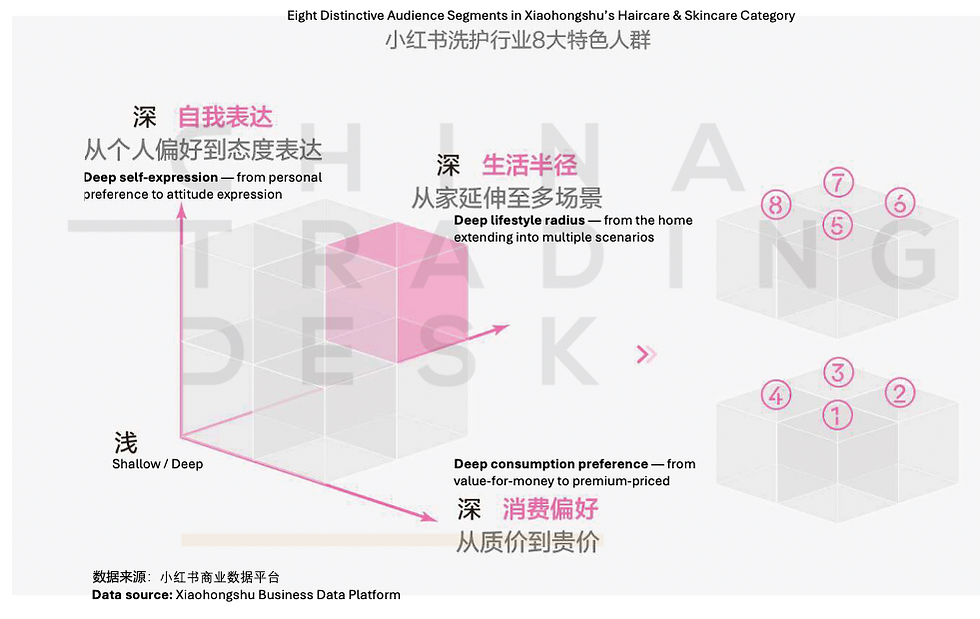
Beauty decisions are shaped by multiple factors, including:
Skin & scenario: Users choose based on skin type, such as oily, dry, acne-prone or sensitive skin, and usage moments such as daily care, post-treatment care or SPA.
Category needs: Each category has different priorities. Make-up focuses on finish and style, skincare on ingredients and trust, oral care on health and appearance, fragrance on mood, and wash care on hair or body needs.
Style & preference: Users compare domestic vs international brands, premium vs mass-market options, colour tones, scent types and beauty styles.
Function & features: Final choices often depend on clear benefits such as brightening, repair, long wear, oil control, volume, smoothness, scent or texture.
For beauty brands on Xiaohongshu, products should be positioned around real user scenarios, not just functional claims. A moisturiser can support a sensitive skin recovery routine, body oil can offer pregnancy-safe comfort, and fragrance can express mood, identity and memory. By using scenario-led Xiaohongshu SEO terms such as “commuting make-up”, “pregnancy-safe body care”, “sensitive skin repair”, “oily scalp care” and “pre-wedding skincare”, brands can match natural search behaviour and capture demand earlier in the consumer journey.
Luxury: From Logo Ownership to Emotional Identity
The luxury section highlights another important shift. Luxury consumption in China is no longer only about owning a recognised logo. It is increasingly connected to identity, emotional value, personal reward, lifestyle aesthetics and social context.

Consumers are becoming more refined in how they evaluate luxury products. They are not only asking whether a brand is premium, but whether the product fits their life stage, social setting, personal style and emotional needs. A luxury bag, watch, jewellery piece or ready-to-wear item can represent a work milestone, a social occasion, a gift, a personal reward or a long-term investment.
Luxury decisions are now shaped by several key factors:
Scenario: Consumers choose luxury based on occasions such as work, travel, gifting, weddings, social gatherings or seasonal moments.
Category: Bags, watches, jewellery, shoes and ready-to-wear each carry different decision priorities, from material and design to function and styling.
Style: Users look for aesthetics that match their identity, such as quiet luxury, vintage, intellectual, relaxed old-money or trend-led styles.
Audience need: Different luxury consumers have different mindsets, from entry-level buyers and self-reward shoppers to refined lifestyle consumers and collectors.
Value: Luxury purchases may be driven by craftsmanship, collectability, scarcity, self-reward, investment value or emotional meaning.
Brand tier: Consumers also compare brand level, price range and symbolic value based on their spending power and desired identity.

For luxury brands, Xiaohongshu content should connect craftsmanship with real-life context. Instead of focusing only on materials, design or heritage, brands should show how the product fits moments such as commuting, business travel, year-end self-reward, graduation, weddings, holidays or gifting.
The emotional hook should move from “this product is luxurious” to “this product reflects who I am becoming”. This is especially relevant for younger affluent consumers who use luxury to express achievement, taste, lifestyle and personal growth.
Travel: From Destination Marketing to Motivation Marketing
The travel section of the report is especially relevant for tourism boards, hotels, airlines, attractions, duty-free retailers and lifestyle brands. Travel on Xiaohongshu is no longer only about sightseeing or checking in at famous attractions. Users are increasingly planning trips around interests, emotions and identity.

Travel decisions are now shaped by three major layers:
Interest motivation: Why users want to travel, from social trips and skill-based experiences to cultural discovery, nature exploration and lifestyle-led escapes.
Travel choices: How users plan the trip, including destination, travel timing, service experience, accommodation, transport access, shopping, food and entertainment.
Traveller segments: Who the traveller is, such as family travellers, relationship-led travellers, quality-focused travellers, business travellers, outdoor explorers or self-reward travellers.
This means a traveller is not only asking, “Where should I go?” They are asking, “What kind of experience do I want, and how does this trip fit my current life?”. A diving trip can become a skill-building journey. A museum tour can become a cultural identity experience. A wellness retreat can become a reset from daily pressure. A beauty-focused Korea trip can connect travel, shopping, self-care and social content in one journey.
For China outbound travel marketing, destination marketing needs to become motivation marketing. Instead of promoting a destination broadly, brands should build content around specific motivations such as healing solo travel, parent-child learning holidays, girlfriend trips, diving certification, outdoor adventure, food-led city breaks, luxury wellness escapes, beauty-focused Korea trips or museum-led cultural routes.
Chinese travellers research across Xiaohongshu, Douyin, WeChat, OTAs, search engines and review platforms. A strong strategy must make the brand visible, searchable and credible across the full decision journey.
How Brands Should Respond
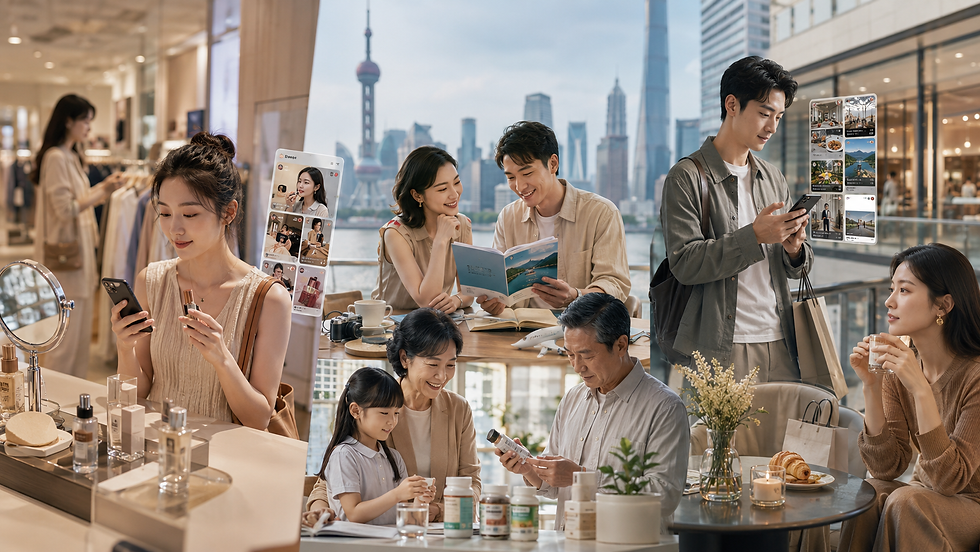
Across travel, luxury and beauty, Xiaohongshu’s 2026 Crowd Universe shows a clear shift: brands need to move beyond broad audience targeting and build content around real consumer motivations, scenarios and search behaviour.
1. Travel brands:
Move from destination-led promotion to motivation-led storytelling.
Focus on why people travel, whether for healing, family bonding, cultural discovery, outdoor adventure or lifestyle exploration.
Focus content on answering practical planning needs, such as where to go, when to travel and what to experience.
Searchable Xiaohongshu keywords like “healing solo travel”, “parent-child holiday” and “outdoor adventure trip” can help turn travel inspiration into real action.
2. Luxury brands:
Move beyond logo ownership and focus on identity-led luxury marketing.
Connect products to real occasions such as work, gifting, travel, weddings, social gatherings and self-reward moments.
Highlight personal taste, achievement, emotional value, craftsmanship and long-term meaning.
Xiaohongshu storytelling should show how luxury fits daily life and reflects who the consumer is becoming.
3. Beauty brands:
Move from simple product claims to scenario-based beauty solutions.
Build content around real consumer needs, such as sensitive skin, oily scalp, pregnancy-safe care, fragrance relaxation or pre-event routines.
Match product benefits with skin type, mood, life stage and usage occasion.
SEO-friendly Xiaohongshu terms like “sensitive skin repair”, “oily scalp care” and “pregnancy-safe body care” can make beauty content more searchable and conversion-focused.
Overall, brands that understand the “why” behind consumer choices can create sharper Xiaohongshu strategies, improve search visibility and build stronger relevance with Chinese audiences.
The Bigger Opportunity
Xiaohongshu’s 2026 Crowd Universe shows that China marketing is moving from broad targeting to deeper decision understanding. Consumers are still rational, but their choices are increasingly shaped by emotion, lifestyle and context.
For brands, Xiaohongshu is no longer just a content channel. It is a consumer insight engine, a search platform and an intent-building space where brands can understand what audiences want to solve, express and feel.
To win, brands need sharper China market research, Xiaohongshu SEO, KOL strategy, social listening and campaign measurement to move closer to the real decision moment.
Contact us to turn audience insight into a smarter China marketing strategy!


Comments