
2026 Blue Book of China’s Made-to-Order Beverage Market
- See Qian

- 8 hours ago
- 5 min read
China’s fresh-made beverage market is no longer just about tea, coffee or bakery. It is becoming a lifestyle signal, a social activity, a travel memory and a new kind of consumer spending behaviour.
The key shift is simple: consumers are no longer buying only a drink. They are buying a moment.
For tourism, this matters because beverages have become part of how people explore cities, plan breaks during travel, share experiences online and choose where to spend discretionary money. A destination is no longer experienced only through landmarks, hotels and restaurants. It is also experienced through café routes, local tea drinks, bakery-beverage pairings, limited-edition flavours and photo-friendly “small treat” moments.
Beverage trends in China are moving across consumer groups
China’s beverage market is being reshaped by different consumer groups with different emotional and practical needs.

According to the report, four incremental groups are becoming important drivers of beverage and dessert consumption:
“Cool silver” consumers: 13%
Midlife women: 20%
Parent-child consumers: 6%
Office workers: 33%
This creates a new kind of spending behaviour: consumers are not always making big purchases, but they are making frequent, emotional, occasion-led purchases.
For tourism, this is powerful. Travellers often behave like “occasion shoppers”. They buy when they are tired, excited, waiting, walking, sharing, exploring or rewarding themselves. Beverage brands that understand these emotional micro-moments can become part of the tourism journey.
Channel restructuring: foodservice and retail are now competing for the same beverage occasion
The next big trend is channel restructuring.
The report describes a new fusion logic under channel restructuring, where foodservice and retail channels are competing with each other, traffic is shifting, and brands are entering a new cycle of cross-category borrowing and integration.

Beverage consumption is no longer locked inside one channel.
A consumer can buy a fresh tea drink in a mall.
They can order coffee through delivery.
They can buy ready-to-eat bakery from convenience retail.
They can pick up a dessert drink through instant retail.
They can recreate a drink moment at home.
The report also separates consumption locations into three scenarios: 42% dining out or takeaway, 38% ready-to-eat, and 20% home eating.

For tourism, this changes how destinations should think about beverage spending. The opportunity is no longer only “open a café near a tourist spot”. It is about connecting the visitor across the full journey:
before arrival, through social media discovery;
during travel, through store, takeaway and instant retail;
after the trip, through packaged flavours, souvenirs and home-consumption products.
In other words, the beverage moment can extend the destination beyond the destination.
Scenario > people > category: consumers are choosing by moment, not label
The most important strategic shift is that scenario now comes before category.
Consumer choice is no longer limited to category labels. Instead, consumers are becoming loyal to immediate needs across different scenarios, which is creating cross-format fusion products.
This means consumers do not always start with:
“I want tea.”
“I want coffee.”
“I want bakery.”
They start with:
“I need breakfast.”
“I want something pretty.”
“I need a small reward.”
“I want to share something with friends.”
“I want something refreshing after a heavy meal.”
“I want something that feels healthy but still enjoyable.”
That is why tea, coffee, bakery and desserts are blending. A tea drink can become dessert-like. A bakery item can become drink-inspired. A coffee shop can become a breakfast stop, lunch option or night social space.
For tourism, this means food and beverage brands can become part of itinerary design. A city walk can include a local tea stop. A museum route can include a seasonal dessert drink. A shopping district can promote café-hopping. A hotel can package morning coffee, afternoon tea and late-night social drinks as part of the guest experience.
Four growth consumer groups are creating new spending behaviour
The four consumer groups highlighted in the report are important because they show how beverage spending is becoming more emotional, segmented and scene-based.

Cool silver consumers
They are not only buying for health.
They want to stay current and socially connected.
Beverage stores can become social spaces for them.
The report notes that silver consumers’ move from tea houses to coffee shops reflects a wider social extension. It also highlights China’s large older population and the importance of social scenes in creating store value.
Midlife women
They are economically independent.
They value quality, ritual and self-reward.
They are willing to pay for beauty, mood and premium texture.
This group is important for tourism because they are likely to respond to beautifully designed products, afternoon tea experiences, wellness-inspired flavours and destination-themed drinks.
Parent-child consumers
They combine children’s needs with their own quality-of-life expectations.
They look for fun, safety, comfort and shareable formats.
They create opportunities for family-friendly beverage tourism.
For destinations, this could mean child-friendly drink menus, low-sugar options, small-size bakery pairings and family café routes.
Office workers
They want pleasure without feeling unhealthy.
They look for quick emotional repair during the day.
They respond to products that combine refreshment, energy and light wellness cues.
For tourism, this behaviour also appears in business travel and urban short breaks. A beverage is not just a refreshment; it is a pause, a mood reset and a small personal reward.
Scenario matrix: emotional value is now the growth engine
The final trend is the rise of emotional-value scenarios.
The report states that fresh-made beverage growth has entered an emotional-value-led scenario era. High-growth scenes include solo self-reward, multi-person socialising and self-discipline identity, all of which help brands create differentiation.
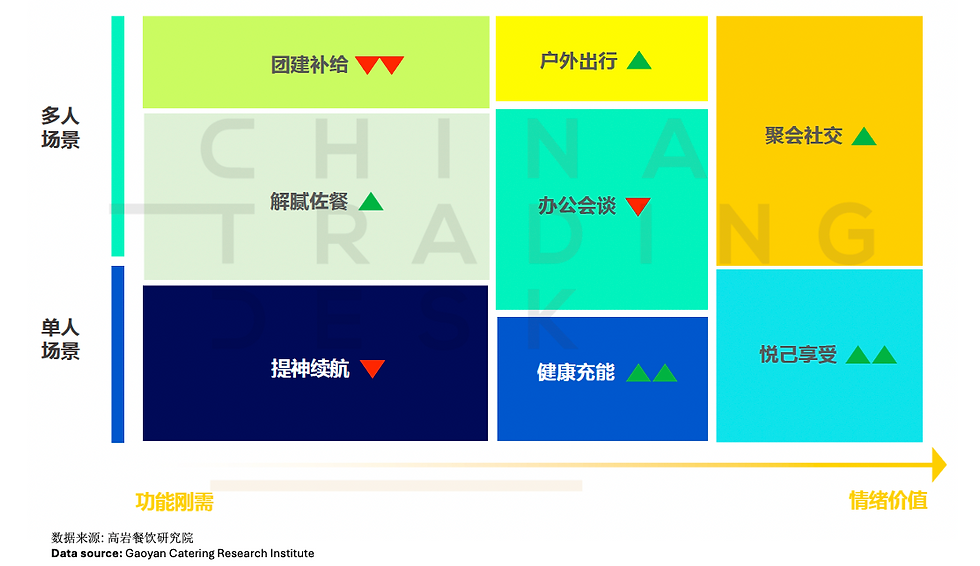
This is where the tourism connection becomes clearest.
Tourism is already emotional. People travel to relax, reconnect, discover, celebrate, escape and share. Beverage brands can plug directly into these feelings.
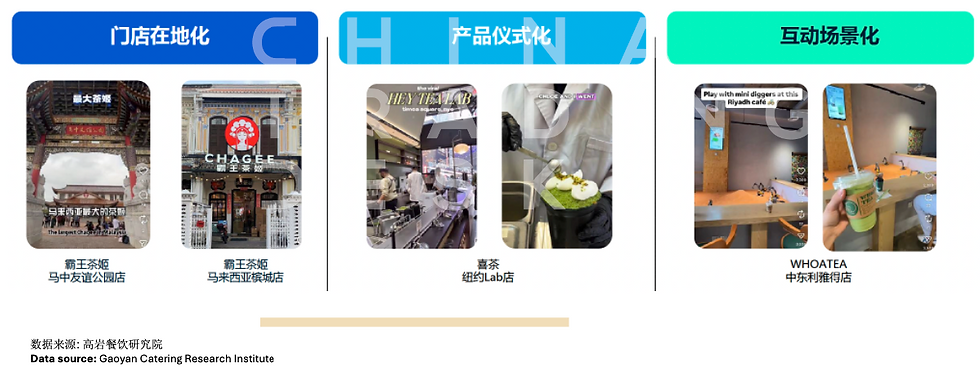
The strongest tourism-linked opportunities include:
Solo self-reward: drinks for city walks, museum breaks, hotel stays and solo travel moments.
Multi-person socialising: drinks and bakery sets for friends, family trips, group tours, camping and nightlife.
Self-discipline identity: low-burden drinks, fresh ingredients and “healthy pleasure” products for wellness tourism, sports tourism and outdoor travel.
The report also warns that pure functional demand, such as only refreshing or energising, is losing its premium power because consumers are less willing to pay extra for basic functions alone.
That is the new spending behaviour: consumers still want function, but they pay more willingly for function wrapped in emotion, identity and experience.
Conclusion: Beverage is becoming a tourism experience category
China’s beverage market is shifting from category competition to scenario competition. Tea, coffee, bakery and desserts are no longer separate lanes; they are merging around consumer moments, emotional value, sensory design and channel convenience.
For tourism brands, malls, hotels, airports and destination marketers, beverages should be treated as small-ticket but high-frequency experience spending. The opportunity is to build drink moments into the travel journey, use local flavours as destination storytelling, and create products that are easy to photograph, share and remember.
Contact our team to learn more about tourism experience and travel retail insights.


Comments